
Art Hx 2022 Symposium:
curative / spaces
Thursday, April 28, 2022
9:00am to 5:00pm ET
and
Friday, April 29, 2022
10:30am to 3:30pm ET
Event Description
Schedule
Abstracts
The symposium schedule, presentation abstracts, and information about the speakers can be found below.
As the culmination of a yearlong programming series, Art Hx: Visual and Medical Legacies of British Colonialism presents our 2022 symposium: curative / spaces. Bringing together artists, curators, writers, organizers, and academics, curative / spaces offers a forum for the exploration of the relationships between race, space, and healthcare through the lens of art and design. Panelists will consider the many implications of these intersections while also reflecting upon their significance for communities’ access to resources, meanings about the body, and our understandings and conceptions of healthcare. curative / spaces is organized as a call for the imaginative redesign of processes of health injustice and the building of new practices of care together through art’s ability to transform society.
Sponsors: Princeton University’s Humanities Council Exploratory Grant in Collaborative Humanities, Center for Digital Humanities, Department of Art & Archaeology, Lewis Center for the Arts, and School of Architecture; 2021-24 Public Humanistic Inquiry Lab, Colby College; Confabulations: Durham University Institute for Medical Humanities, Leicester Wellcome Trust ISSF, and Social Sciences and Humanities Research Council of Canada.
Thursday, April 28, 2022
9:00am ET Opening Remarks Anna Arabindan-Kesson
9:15am to 10:30am ET Panel 1 | Longing and HealingRiva Lehrer, Sharrona Pearl, Giulia Smith
10:45am to 12:15pm ET Panel 2 | Confabulations: Institutions, Power, and AccessMichaela Clark, Sadie Levy Gale, Chimwemwe Phiri, Shelley Angelie Saggar
12:30pm to 1:30pm ET Opening Keynote | A Conversation with artist Andrea Chung
1:30pm to 3:00pm ET Panel 3 | How Do We Create Places of Care, of Possibility?Linda Black Elk, Sarah Khan, Carolyn Finney, Ellen Sebastian Chang
3:45pm to 5:00pm ET Panel 4 | Skin, Color, Disease, and PlaceCecilio M. Cooper, Keren Hammerschlag, Elise MitchellFriday, April 29, 2022
10:30am to 12:00pm ET Panel 5 | Environments, Organisms, and the (Un)SeenDaniella Rose King, Nate Lewis, Paige Patchin
12:30pm to 1:30pm ET Closing Keynote | 10,000 Recollections…Never Forgotten, Mabel O. Wilson
1:45pm to 3:15pm ET Panel 6 | Foregrounding Care and Defining our Terms: Considerations for Art HxJoseph Litts, Luke Naessens, Jessica Womack
3:15pm to 3:30pm ET Closing Remarks Jessica Womack
Speakers

-
Anna Arabindan-Kesson is an assistant professor of African American and Black Diasporic art with a joint appointment in the Departments of African American Studies and Art and Archaeology. Born in Sri Lanka, she completed undergraduate degrees in New Zealand and Australia, and worked as a Registered Nurse in the UK before completing her PhD in African American Studies and Art History at Yale University.Professor Arabindan-Kesson's research and teaching focus on Black Diaspora Art, with an emphasis on histories of race, empire, and medicine in the long 19th century. She also has interests in British, South Asian and Australian art. Her first book Black Bodies, White Gold: Art, Cotton, and Commerce in the Atlantic World (2021), is available from Duke University Press. She is also writing a book, supported by an ACLS Collaborative Research Fellowship, with Professor Mia Bagneris (Tulane University) called Beyond Recovery: Reframing the Dialogues of Nineteenth-Century Black Diaspora Art. Her second monograph is called An Empire State of Mind: Plantation Imaginaries and British Colonialism. In 2020, she began directing Art Hx, a new digital project and object database that addresses the intersections of art, race and medicine in the British empire. She is currently a Visiting Fellow, Center for The Study of Social Difference, Columbia University and a 2021 Center for Digital Humanities Data Fellow at Princeton University. Professor Arabindan-Kesson is a board member of several arts organizations, continues to curate exhibitions and works closely with contemporary artists internationally.
-
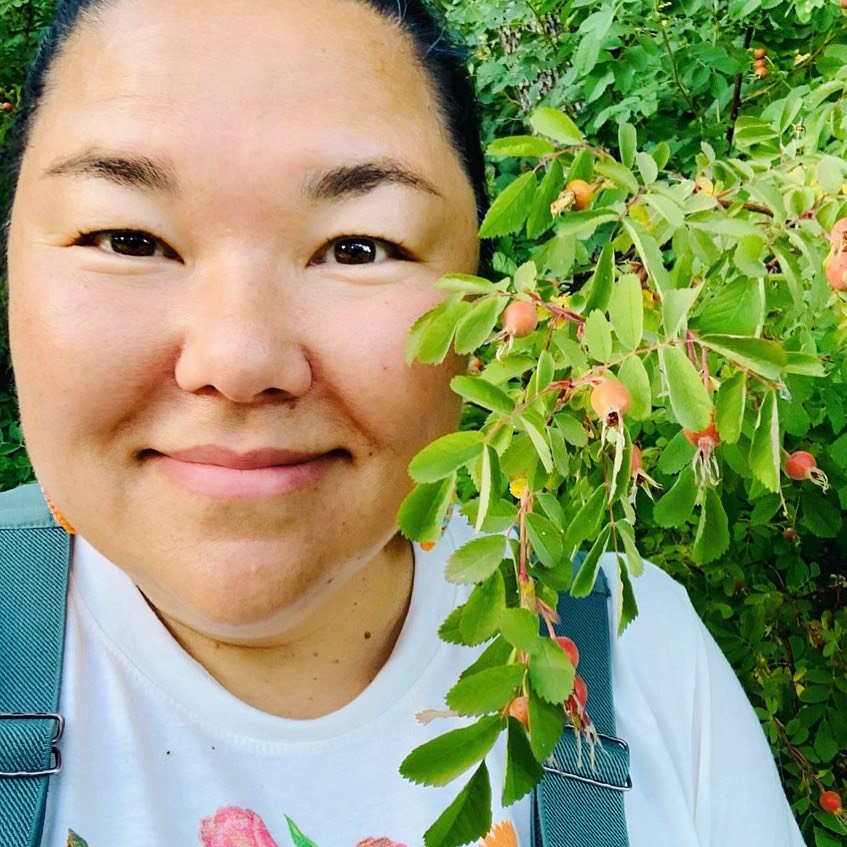
Linda Black Elk is an ethnobotanist and food sovereignty activist who specializes in teaching about culturally important plants and their uses as food, medicine, and materials. Linda works to build capacity in her community and beyond and to promote and protect traditional plant knowledge and environmental quality as an extension of the fight against extractive industry. Linda has written for numerous publications, and she is the author of “Watoto Unyutapi”, a field guide to edible wild plants of the Dakota people. Linda currently serves as the Food Sovereignty Coordinator at United Tribes Technical College in Bismarck, North Dakota, and she spends her free time with her husband and three sons, who are all citizens of the Oceti Sakowin.

-
Andrea Chung (b. 1978, Newark, NJ) lives and works in San Diego, California. She received a BFA from Parsons School of Design, New York, and a MFA from Maryland Institute College of Art, Baltimore. Her recent biennale and museum exhibitions include the Addison Museum of American Art, Prospect 4, New Orleans and the Jamaican Biennale, Kingston, Jamaica, as well as the Chinese American Museum and California African American Museum in Los Angeles, and the San Diego Art Institute. In 2017, her first solo museum exhibition took place at the Museum of Contemporary Art San Diego, You broke the ocean in half to be here. She has participated in national and international residencies including the Vermont Studio Center, McColl Center for Visual Arts, Headlands Center for the Arts, and Skowhegan School of Painting and Sculpture. Her work has been written about in the Artfile Magazine, New Orleans Times, Picayune, Artnet, The Los Angeles Times, and International Review of African-American Art among others. Her work is included in collections such as the Museum of Contemporary Art San Diego, Rhode Island School of Design Museum, NoVo Foundation, Cleveland Clinic Art & Medicine Institute, Minneapolis Institute of Art, Davis Museum at Wesley College, Addison Museum of American Art, and the J. Paul Getty Museum.

-
Michaela Clark is a Ph.D. candidate at the Centre for the History of Science, Technology and Medicine (CHSTM), University of Manchester. She trained in Visual Culture Studies at Stellenbosch University, South Africa where she has worked as lecturer, student supervisor, course coordinator and blended learning designer. Her ongoing doctoral project focuses on a 20th century collection of clinical surgery photographs held at the University of Cape Town’s (UCT) Pathology Learning Centre in South Africa.

-
Keren Rosa Hammerschlag is a Senior Lecturer in Art History and Curatorship in the Centre for Art History and Art Theory at the Australian National University in Canberra. Her research focuses on nineteenth-century art and visual culture and the intersections between art and medicine during the Victorian and Edwardian periods. She is the author of Frederic Leighton: Death, Mortality, Resurrection (Ashgate, 2015). Her current book project focuses on the representation of racial difference and racial indeterminacy in Victorian painting. Her article, "Christ’s Racial Origins: Finding the Jewish Race in Victorian History Painting," appeared in The Art Bulletin in 2021.

-
Cecilio M. Cooper is a Forsyth Postdoctoral Research Fellow in the University of Michigan’s History of Art Department and an American Antiquarian Society-National Endowment for the Humanities Fellow. Previously, they’ve taught in the English and Africana Studies programs at Tulane University as well as at the Center for Bioethics and Medical Humanities at Northwestern University’s Feinberg School of Medicine. Dr. Cooper is currently preparing their first book manuscript, which is tentatively titled South of Heaven: Surface, Territory + the Black Chthonic. By engaging visual cultures of alchemy, demonology, cartography, and beyond, it examines the occulted role blackness plays in cosmological constitutions of subsurface space.
-
Linda Black Elk is an ethnobotanist and food sovereignty activist who specializes in teaching about culturally important plants and their uses as food, medicine, and materials. Linda works to build capacity in her community and beyond and to promote and protect traditional plant knowledge and environmental quality as an extension of the fight against extractive industry. Linda has written for numerous publications, and she is the author of “Watoto Unyutapi”, a field guide to edible wild plants of the Dakota people. Linda currently serves as the Food Sovereignty Coordinator at United Tribes Technical College in Bismarck, North Dakota, and she spends her free time with her husband and three sons, who are all citizens of the Oceti Sakowin.

-
Carolyn Finney, PhD is a storyteller, author, and a cultural geographer who is grounded in both artistic and intellectual ways of knowing. She pursued an acting career for eleven years, but five years of backpacking trips through Africa and Asia and living in Nepal changed the course of her life. Carolyn returned to school after a 15-year absence to complete a B.A., M.A., and a Ph.D. She was a Fulbright and a Canon National Science Scholar Fellow. Along with public speaking, writing, media engagements, consulting, and teaching, she served on the U.S. National Parks Advisory Board for eight years. Her first book, Black Faces, White Spaces: Reimagining the Relationship of African Americans to the Great Outdoors, was released in 2014.She is working on her new book (a more personal journey into the relationship between race, land, and belonging) and a performance piece entitled The N Word: Nature Revisited as part of an Andrew W. Mellon residency at the New York Botanical Gardens Humanities Institute. She is a columnist at the Earth Island Journal and an artist-in-residence at Middlebury College.
-
Andrea Chung (b. 1978, Newark, NJ) lives and works in San Diego, California. She received a BFA from Parsons School of Design, New York, and a MFA from Maryland Institute College of Art, Baltimore. Her recent biennale and museum exhibitions include the Addison Museum of American Art, Prospect 4, New Orleans and the Jamaican Biennale, Kingston, Jamaica, as well as the Chinese American Museum and California African American Museum in Los Angeles, and the San Diego Art Institute. In 2017, her first solo museum exhibition took place at the Museum of Contemporary Art San Diego, You broke the ocean in half to be here. She has participated in national and international residencies including the Vermont Studio Center, McColl Center for Visual Arts, Headlands Center for the Arts, and Skowhegan School of Painting and Sculpture. Her work has been written about in the Artfile Magazine, New Orleans Times, Picayune, Artnet, The Los Angeles Times, and International Review of African-American Art among others. Her work is included in collections such as the Museum of Contemporary Art San Diego, Rhode Island School of Design Museum, NoVo Foundation, Cleveland Clinic Art & Medicine Institute, Minneapolis Institute of Art, Davis Museum at Wesley College, Addison Museum of American Art, and the J. Paul Getty Museum.

Sarah K Khan headshot in front of a striped background

A photograph of Daniella Rose King. Photo by: Constance Mensh

Image is of a short white woman in her sixties, with red-and-white striped hair and angular black glasses. She is smiling and wears a black sweater with a wide neck, a silver necklace in the shape of skeleton hands, and silver earrings. She stands outside in front of a bright-yellow elevator door.


Headshot of Joseph Litts

A headshot of Dr. Elise A. Mitchell wearing a white blouse and gold and teal scarf. She is sitting in front of a bookcase.

Headshot of Luke Naessens

Headshot of Paige Patchin

Headshot of Sharrona Pearl.

This is a headshot of Chimwemwe Phiri. She is sitting on a bench and there is a view of a river.

Headshot of Shelley Angelie Saggar, PhD candidate and collections researcher
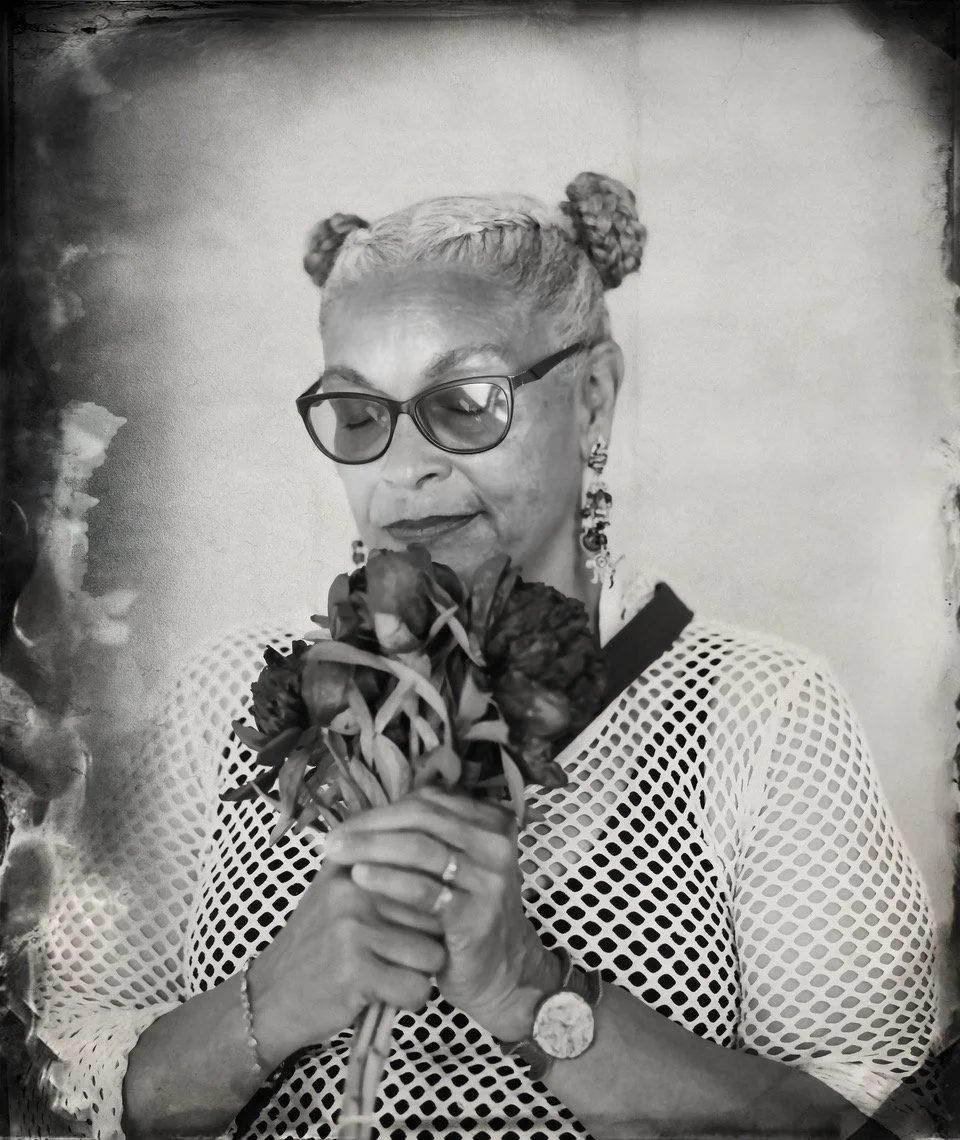
Ellen Sebastian Chang Black and White Photo Holding Flowers. Photo by Joan Osato

Headshot of Giulia Smith

Woman wearing a turtle neck shirt, round glasses, long silver pod shaped earrings. She smiles with both hands clasped and elevated next to her face.

A headshot of Jessica Womack. She is a Black woman with curly hair and glasses wearing a white shirt.
[/lightweight-accordion] [lightweight-accordion title="Carolyn Finney"][/lightweight-accordion] [lightweight-accordion title="Keren Hammerschlag"][/lightweight-accordion] [lightweight-accordion title="Sarah Khurshid Khan"]Sarah Khurshid Khan explores food, culture, women, migration, and identity in urban and rural environments. A multimedia maker and scholar, she uses the sensorium, photography, films, printmaking, maps, and writing to defy erasure. Simultaneously, she builds archives to reveal the often invisible labor and mastery of the disregarded. Her works have been shown nationally and internationally, and she has received grants, fellowships, and residencies to pursue her work, including Princeton Art Hx (2021-22) Artist-in-Residence, Ellis Beauregard; Monson Arts; Project for Empty Space Feminist Residency; Indigo Arts Alliance; and The Boren Chertkov Residency for Labor and Justice at Blue Mountain Center.[/lightweight-accordion] [lightweight-accordion title="Daniella Rose King"]Daniella Rose King is a writer and curator concerned with artistic practices of the Caribbean diaspora with a particular focus on feminist readings of transatlantic geographies and their histories of extraction. She is Adjunct Curator, Caribbean Diasporic Art, Hyundai Tate Research Centre: Transnational, working across Tate Modern and Tate Britain. She was the 2017-2020 Whitney-Lauder Curatorial fellow at the Institute of Contemporary Art, University of Pennsylvania, where she curated The Last Place They Thought Of (2018) and Deborah Anzinger: An Unlikely Birth (2019). She holds an MA in Curating Contemporary Art from the Royal College of Art, London.[/lightweight-accordion] [lightweight-accordion title="Riva Lehrer"]Riva Lehrer is an artist, writer, and curator who focuses on the socially challenged body. Recipient of multiple awards for her visual work, Lehrer is best known for representations of people whose physical embodiment, sexuality, or gender identity have long been stigmatized. Lehrer’s memoir, Golem Girl, (One World/ Penguin Random House) won the 2020 Barbellion Prize for Literature and was a finalist for the National Book Critics Circle Award. She is represented by Regal Hoffman & Associates (NYC) and by Zolla/Lieberman Gallery (Chicago).[/lightweight-accordion] [lightweight-accordion title="Sadie Levy Gale"]Sadie is a Ph.D. candidate at Cardiff University's School of Journalism, Media and Culture as part of an AHRC funded Collaborative Doctoral Award with Bristol University and Historic England. Her research examines visual representations of empire, healthcare, and the built environment in England in the inter-war and post-war periods, using photographic archives as a key source. Sadie’s project focuses particularly on Historic England's Topical Press Agency medical photography collection, as well as the Illustrated London News and Picture Post archives. She is interested in how press photography constructed and disseminated an imperial vision of Britain’s medical, environmental, and moral supremacy in the first half of the twentieth century.[/lightweight-accordion] [lightweight-accordion title="Joseph Litts"]Joseph Litts is a Ph.D. student in the department of Art and Archaeology at Princeton University, where his research focuses on early American and imperial British and French art. He is particularly interested in materiality, theories of portraiture, visual culture, and the relationship between aesthetics and settler colonialism. The recipient of a Havner curatorial fellowship at Crystal Bridges Museum of American Art, Joseph has also worked at the Georgia Museum of Art and the Colonial Williamsburg Foundation. This academic year, he is a participant in the Mellon-Marron Research Consortium at the Museum of Modern Art, New York. Joseph is also Art Hx Lead Graduate Researcher.[/lightweight-accordion] [lightweight-accordion title="Elise Mitchell"]Dr. Elise A. Mitchell is a historian of the early modern Black Atlantic and currently a Presidential Postdoctoral Research Fellow in the History Department at Princeton University. Broadly, her work examines the social and cultural histories of slavery, the body, medicine and healing, disease, race, and gender in the early modern Atlantic World. Mitchell’s scholarly publications include a chapter in Medicine and Healing in the Age of Slavery and forthcoming articles in The William and Mary Quarterly and The Journal of the Early Republic. Her work has received support from the Ford Foundation, the Social Science Research Council, the Huntington Library, and the McNeil Center for Early American Studies.[/lightweight-accordion] [lightweight-accordion title="Luke Naessens"]Luke Naessens is a Ph.D. candidate in the Department of Art and Archaeology at Princeton University and a member of the Art Hx research team. His dissertation examines the intersections of art, visual culture, and Indigenous activism in the United States during the 1970s. Before Princeton, he studied at Trinity College Dublin and the Courtauld Institute of Art and worked on the curatorial team at the Barbican Centre in London.[/lightweight-accordion][lightweight-accordion title="Paige Patchin"]Paige Patchin is a Lecturer (Assistant Professor) in Race and Postcolonial Studies at University College London. A feminist geographer, her work looks at structures of power in biological, health, and earth sciences. She is currently working on two books. The first, near completion for Duke University Press, is on the Zika public health emergency; it takes the circulation of the virus within empire and patriarchy as a point of departure for rethinking reproductive health. The second, just beginning, is a multi-sited study of ecofascist culture and politics. [lightweight-accordion title="Sharrona Pearl"]Sharrona Pearl is a Associate Professor of Bioethics at Drexel University. A historian and theorist of the face, Pearl's most recent book is Face/On: Face Transplants and the Ethics of the Other. Pearl has published widely in the areas of Victorian visual culture, health humanities, critical race, gender, and disability, and media and communication. You can find clips of her freelance writing on her website, www.sharronapearl.com.[/lightweight-accordion] [lightweight-accordion title="Chimwemwe Phiri"]Chimwemwe Phiri is a third-year doctoral researcher in medical anthropology and visual history at Durham University. Her research examines the legacies of two medical photographic collections related to two former British colonial medical officers that are held in four UK based archives. Using archival research, visual analysis, and curatorial practice across Malawi and Sudan, her Ph.D. project explores histories of race, violence, the ethical dimensions of medical photography, questions of ownership, and the afterlives of archival material.[/lightweight-accordion] [lightweight-accordion title="Shelley Angelie Saggar"]Shelley Angelie Saggar is a CHASE funded Ph.D. researcher and museum worker based across the School of English and the Centre for Indigenous and Settler Colonial Studies at the University of Kent. Her research examines contestations and reclamations of the museum in Native North American and Maori cultural texts. She also works as a collections researcher at the Science Museum, where her focus is on developing protocols for managing culturally sensitive items in the historical medical collections.[/lightweight-accordion] [lightweight-accordion title="Ellen Sebastian Chang"]Ellen Sebastian Chang (she/her) has worked 45 years in the performing arts as a lighting designer, director, and arts educator. She currently collaborates with AfroFuturist Conjure artist Amara Tabor Smith’s House/Full of BlackWomen, serves as the creative director of The World As It Could Be: Human Rights and the Arts Education Program, and The Liberation Academy with San Francisco’s Dance Mission. She is a recipient of awards and grants from Creative Capital, MAP Fund, A Blade of Grass Fellowship in Social Engagement, Art Matters, K. Rainin Foundation, NEA, Creative Work Fund, California Arts Council, and Zellerbach Community Arts Fund.[/lightweight-accordion] [lightweight-accordion title="Giulia Smith"]Dr. Giulia Smith is a Leverhulme Early Career Research Fellow at the Ruskin School of Art, University of Oxford, where she specializes in modern and contemporary art with an emphasis on the biopolitical and environmental legacies of empire in Britain and across the Atlantic world. Dr. Smith is currently working on two book projects, titled respectively Crip Aesthetics: Contemporary Art and the Politics of Sickness and Living Landscapes: Biotic Resistance in the Transnational Caribbean. In the past she has published in British Art Studies, Third Text, Art History, and Art Monthly, among other journals.[/lightweight-accordion] [lightweight-accordion title="Mabel O. Wilson"]Cultural historian, architectural designer, and curator Mabel O. Wilson teaches Architecture and Black studies at Columbia University, where she also serves as the director of the Institute for Research in African American Studies. With her practice Studio&, she was a member of the design team that recently completed the Memorial to Enslaved Laborers at the University of Virginia. Wilson has authored Begin with the Past: Building the National Museum of African American History and Culture (2016) and Negro Building: Black Americans in the World of Fairs and Museums (2012), as well as co-edited the volume Race and Modern Architecture: From the Enlightenment to Today (2020). For the Museum of Modern Art in New York City, she was co-curator of the exhibition Reconstructions: Architecture and Blackness in America (2021).[/lightweight-accordion] [lightweight-accordion title="Jessica Womack"]Jessica Womack is a Ph.D. Candidate in the Department of Art and Archaeology at Princeton University and the project manager of Art Hx. Her dissertation focuses on Jamaican art after independence in 1962 and examines the negotiations, partnerships, and tensions between artists, arts institutions, and government officials. She received her A.B. in art history from Dartmouth College. Before starting her graduate work, she held curatorial and programming positions at the Hood Museum of Art and the Museum of Modern Art. She was selected as a 2021-2022 Caribbean Cultural Center African Diaspora Institute Afro-Caribbean Art Curatorial Fellow.[/lightweight-accordion]